The World Health Organization points out that the tobacco industry acts to influence or capture political and legislative processes, seeking to shape regulations, weaken public health policies, and interfere in governmental decision-making. The tactics used for this include lobbying (whether directly or through front groups), inciting disputes between health ministries and economic sectors, drafting and disseminating industry-friendly legislative proposals, and attempting to access negotiations of the Parties to the Framework Convention on Tobacco Control (WHO FCTC).1
In Brazil, the Sectoral Chamber of the Tobacco Production Chain, established by the Ministry of Agriculture and Livestock (Mapa) in 2004,2 has been a relevant actor in this regard since its creation. In the words of its current president, Romeu Schneider, the Chamber “sought to prevent the approval of the ratification of the Framework Convention on Tobacco Control by Brazil,” meeting with deputies and senators and holding public hearings for this purpose.3
The body also mobilizes to defend industry interests in dialogues with authorities representing Brazil at sessions of the Conference of the Parties (COP) to the WHO FCTC.4 Its members include representatives from the Brazilian Tobacco Industry Association (Abifumo), the Interstate Tobacco Industry Union (SindiTabaco), the Tobacco Growers Association of Brazil (Afubra), and the Association of Tobacco-Producing Municipalities (Amprotabaco).5
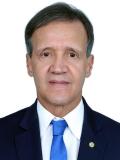
When corporate donations to electoral campaigns were still permitted in Brazil, tobacco companies donated resources to legislators who to this day remain part of their support base in Congress, such as federal deputies Heitor Schuch (PSB-RS)6, Alceu Moreira (MDB-RS)7 and Marcelo Moraes (PL-RS).8 Together with other parliamentarians, they act as allies of the tobacco industry, including mobilizing to try to influence Brazil’s position at COP meetings.4
Moraes, notably, was involved in one of the most emblematic recent attempts to weaken the implementation of the WHO FCTC in Brazil: in 2019, he took part in an effort to dismantle the National Commission for the Implementation of the Framework Convention (Conicq)9. The Commission was in fact dissolved that year by decree—although it continued its activities based on a legal opinion from the Ministry of Health’s Legal Advisory Office. However, the official reestablishment of Conicq only occurred in 2023.
The composition of the Commission has also been contested. In 2023, Afubra requested the inclusion of the tobacco production chain among its members10 and, in 2025, federal deputies Heitor Schuch, Marcelo Moraes, and Rafael Pezenti (MDB-SC) introduced Bill 877/202525, which proposes that Conicq must include representatives from the National Congress, rural producers, and authorities from Brazilian states with significant tobacco production.4
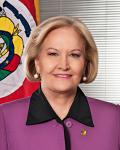
In the context of discussions on the regulation of Electronic Smoking Devices (ESDs) in Brazil, Bill 5,008/2023 stands out. Authored by Senator Soraya Thronicke (Podemos-MS), it proposes allowing the production, import, export, commercialization, and consumption of electronic cigarettes in the country.11 In 2024, the senator traveled to Bologna, Italy, to visit facilities of Philip Morris International where heated tobacco devices are produced, in a trip fully funded by the company.10
Still in this context, BAT Brasil used the so-called “revolving door” mechanism, through which corporations hire former public officials to influence political decisions: it hired former Anvisa director Alessandra Bastos as a consultant less than one year after her departure from the agency. This tactic allows the company to have someone who understands internal processes, while also lending credibility to its public image.12
Industry representatives and their allies are also able to engage directly with the Executive branch, with limited transparency in these interactions: according to monitoring conducted by ACT Promoção da Saúde, in 2023 and 2024 at least 27 meetings were held between government representatives and industry allies or companies, with the Ministry of Finance being the body with the highest number of meetings. The most frequent topics involved issues such as tax burden and minimum pricing, but in many cases the subjects discussed were not adequately disclosed, being accessible only through requests under the Access to Information Law.10
Article 5.3 of the WHO FCTC establishes that Parties must protect their tobacco control policies from commercial interference by the industry.13 The guidelines for implementing this Article recommend that countries limit interactions with the sector, ensure full transparency in any contact, and prevent conflicts of interest in institutional processes.14
- 1. World Health Organization. Tobacco Industry Interference - A global brief [Internet]. 2012. Available from: https://iris.who.int/server/api/core/bitstreams/4bae7c52-79c3-473c-b846-...
- 2. Brasil. Ministério da Agricultura, Pecuária e Abastecimento. Portaria no 231, de 10 de setembro de 2004 [Internet]. 2004. Available from: https://pesquisa.in.gov.br/imprensa/jsp/visualiza/index.jsp?data=09/01/2...
- 3. Pecuária e Abastecimento MDA. Contribuições das Câmaras Setoriais e Temáticas à Formulação de Políticas Públicas e Privadas para o Agronegócio. Rev Bras Hortic Ornam. 2007 Jun 11;13(1). doi:10.14295/rbho.v13i1.200
- 4. a. b. c. Observatório sobre as Estratégias da Indústria do Tabaco [Internet]. 2025 [cited 2026 Mar 26]. A indústria do tabaco no Brasil e a COP11. Available from: https://tabaco.ensp.fiocruz.br/pt-br/industria-do-tabaco-no-brasil-e-cop...
- 5. Ministério da Agricultura e Pecuária [Internet]. [cited 2026 Mar 26]. Tabaco. Available from: https://www.gov.br/agricultura/pt-br/assuntos/camaras-setoriais-tematica...
- 6. Heitor Jose Schuch | Observatório do Tabaco [Internet]. [cited 2026 Mar 26]. Available from: https://tabaco.ensp.fiocruz.br/pt-br/pessoas/heitor-jose-schuch
- 7. Alceu Moreira da Silva | Observatório do Tabaco [Internet]. [cited 2026 Mar 26]. Available from: https://tabaco.ensp.fiocruz.br/pt-br/pessoas/alceu-moreira-da-silva
- 8. Marcelo Moraes | Observatório do Tabaco [Internet]. [cited 2026 Mar 26]. Available from: https://tabaco.ensp.fiocruz.br/pt-br/pessoas/marcelo-moraes
- 9. Mathias M. Deputado vice-líder de Bolsonaro confessa ter “combinado” com Onyx extinção de colegiado antitabaco. O Joio e O Trigo [Internet]. 2022 Feb 15 [cited 2026 Mar 26]. Available from: https://ojoioeotrigo.com.br/2022/02/deputado-vice-lider-de-bolsonaro-con...
- 10. a. b. c. ACT Promoção da Saúde, Fundação Oswaldo Cruz, Global Center for Good Governance in Tobacco Control. Índice de interferência da indústria do tabaco - Brasil | 2025 [Internet]. 2025. Available from: https://actbr.org.br/wp-content/uploads/2025/10/2025_TII-Index-Questiona...
- 11. PL 5008/2023 - Senado Federal [Internet]. [cited 2026 Mar 26]. Available from: https://www25.senado.leg.br/web/atividade/materias/-/materia/160523
- 12. Mathias M. Lobby corre solto na reta final da decisão sobre cigarro eletrônico. O Joio e O Trigo [Internet]. 2021 Dec 22 [cited 2026 Mar 30]. Available from: https://ojoioeotrigo.com.br/2021/12/muito-lobby-na-reta-final-da-decisao...
- 13. World Health Organization. WHO Framework Convention on Tobacco Control [Internet]. [cited 2025 Sep 11]. Available from: https://wkc.who.int/resources/publications/i/item/9241591013
- 14. World Health Organization. Guidelines for implementation of Article 5.3 [Internet]. Geneva: WHO; 2013 [cited 2026 Mar 25]. Available from: https://fctc.who.int/resources/publications/m/item/guidelines-for-implem...